Kahramanmaraş · Türkiye
Red fields.
Slow sun.
Maraş heat.
Maraş Biberi is inseparable from place: cultivated around Kahramanmaraş, ripened to red, harvested, dried, and prepared in forms that carry color, warmth, aroma, and the region’s food culture.
Watch the harvest film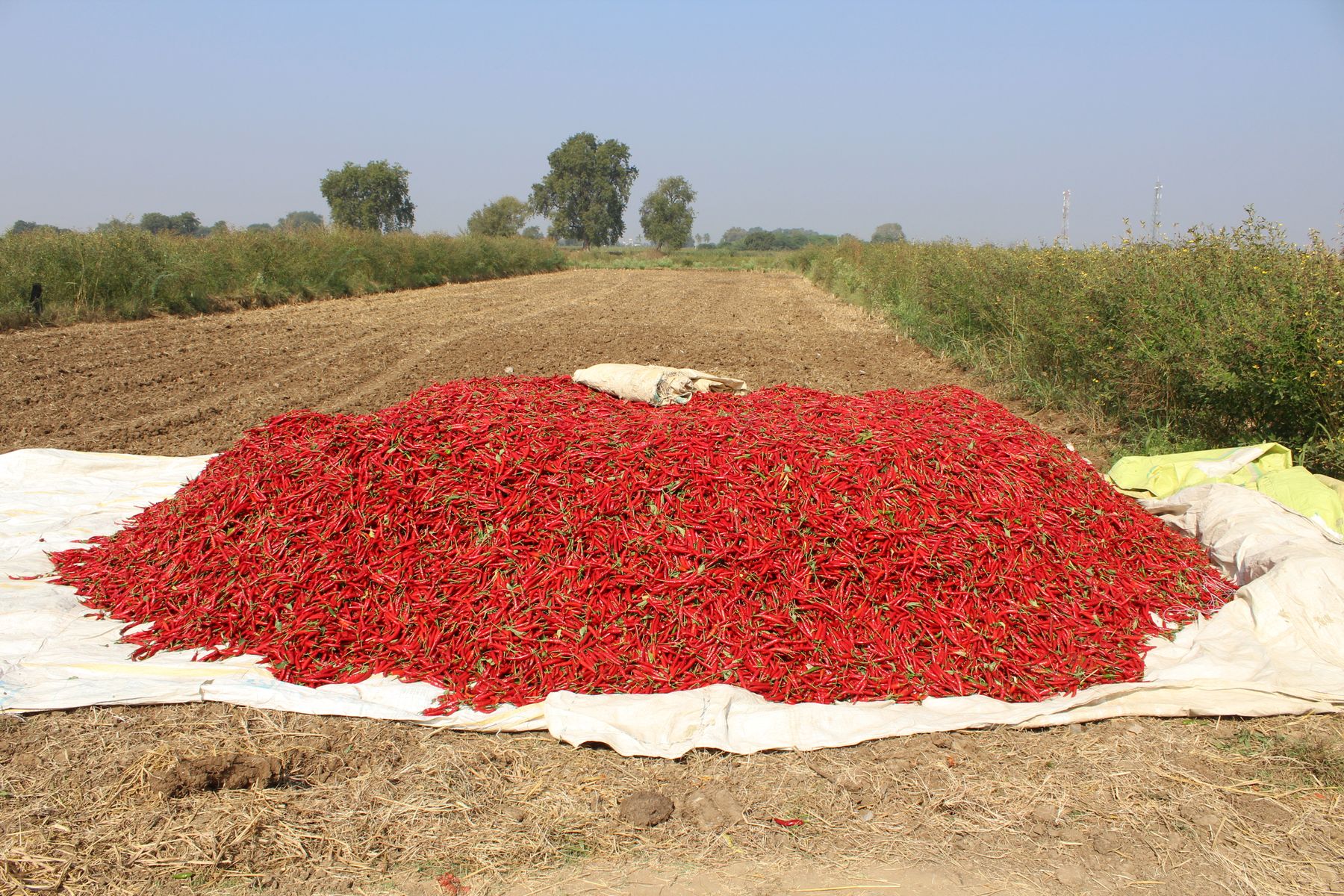
Protected name, working landscape
What the designation tells us.
The Turkish Patent and Trademark Office records “Maraş Biberi” as a Menşe Adı, or designation of origin. The application was filed in 2001 and the registration date is 8 January 2003. The registered province is Kahramanmaraş, and the registrant is the Kahramanmaraş Chamber of Commerce and Industry. A designation of origin connects the named product and its defined qualities or process to the registered geography; it should not be treated as a loose style label.
A Kahramanmaraş gastronomy publication describes the pepper as thin-fleshed and suitable for drying. It may be dried in the sun or in ovens and processed into powder or flakes. In everyday food culture, texture and preparation matter: finely ground pepper, flaked pepper, and oil-and-salt–conditioned styles can produce different visual and sensory results. Exact product composition and process must still be confirmed from the approved producer and specification.
Field to finished pepper
A harvest shaped by timing.
The following sequence explains the general production logic. Individual farms and processors may use different equipment, controls, and specifications.
- 01
Seedling and field establishment
Growers prepare seedlings and transplant into suitable fields after cold risk has passed. Variety selection, irrigation, soil, heat, and plant care influence yield and the balance of color, flesh, aroma, and pungency.
- 02
Ripening to harvest red
Fruits develop from green toward mature red. Harvest timing is a quality decision: under-ripe fruit may lack the desired color and developed flavor; damaged or over-mature fruit requires careful sorting.
- 03
Hand harvest and selection
Ripe peppers are picked and collected in repeated passes as the field matures. Workers separate unsuitable fruit and protect the harvested crop from unnecessary crushing, soil contact, and prolonged heat before the next step.
- 04
Preparation for drying
Peppers may be cleaned, stemmed, opened, or otherwise prepared according to the intended product. Exposing more surface can speed moisture removal, while hygienic handling and clean drying surfaces help protect the crop.
- 05
Sun or controlled drying
Kahramanmaraş’s strong summer sun supports traditional drying, while controlled systems may also be used. Drying must reduce moisture without inviting contamination or sacrificing too much color and aroma. Weather, airflow, layer depth, turning, and time all matter.
- 06
Milling, flaking, and conditioning
Dried pepper is cleaned and prepared to the target particle size. Powder and flakes release and distribute differently. Some flaked preparations may be conditioned with oil and salt; the precise declaration belongs on the product specification and label.
- 07
Quality release and packing
Commercial lots can be assessed for identity, sensory profile, moisture, color, heat, microbiological criteria, foreign material, treatment status, and packaging integrity as required. Origin, analysis, and traceability records connect the finished lot back to the approved program.
Illustrative harvest film
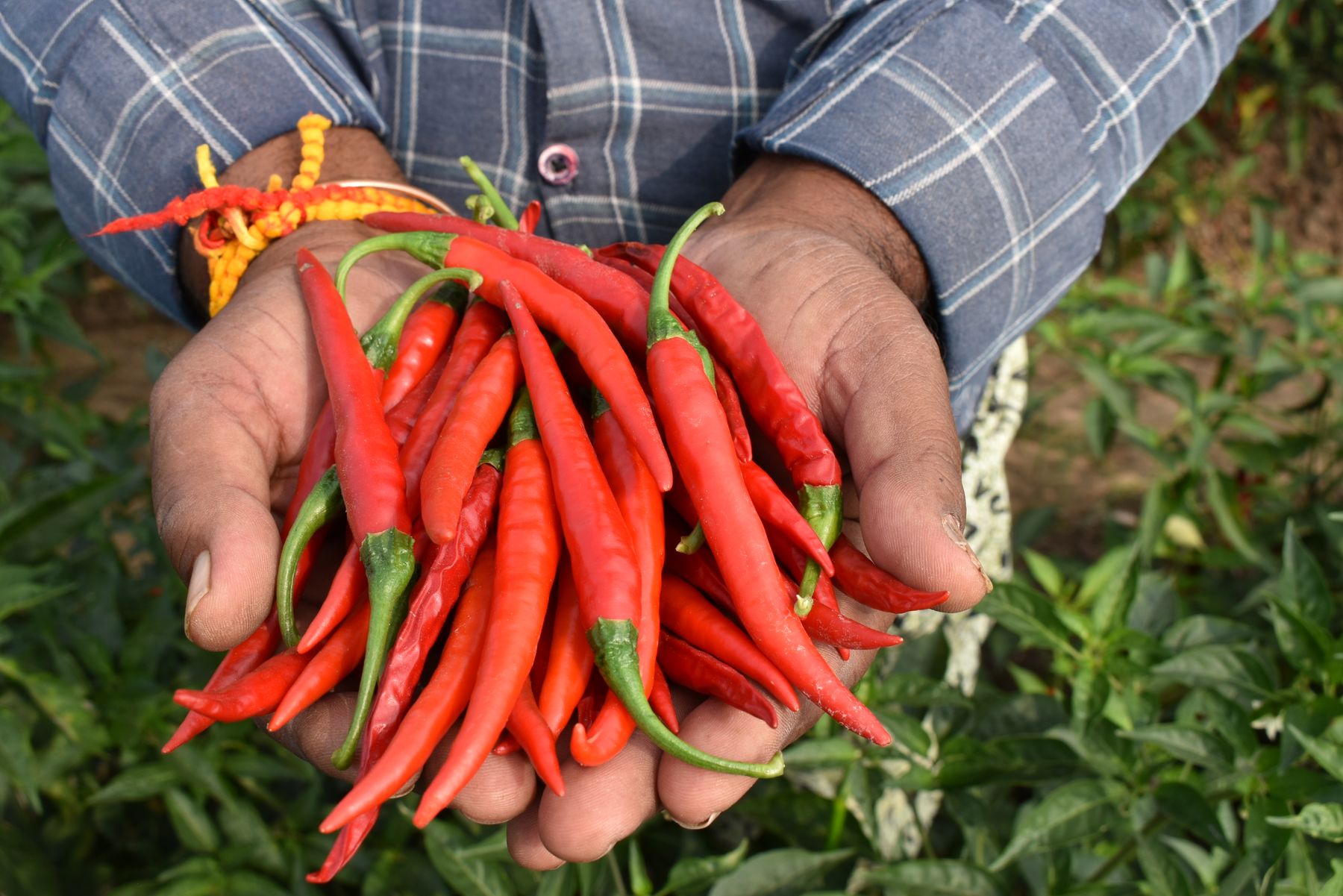
Picking red peppers by hand.
This licensed stock video illustrates field harvesting only. It was not recorded in Kahramanmaraş, does not show Maraş Biberi specifically, and does not depict a Maison De Spices farm or supplier.
Stock video source on Pexels ↗The 2024 harvest, in context
Current figures need a date and a source.
An Anadolu Agency report dated 16 August 2024 covered the start of the geographic-indication–registered harvest in the Avşar area of Onikişubat. The report quoted a local projection of about 30,000 tonnes from roughly 13,000 decares and said more than 500 growers were involved. It also described a municipal program that distributed one million seedlings with a 75 percent grant.
Those numbers describe that report and season; they are not presented here as permanent production statistics or audited market share. Acreage, yield, participation, weather, and prices can change each year. Buyers should request current crop, origin, and availability information for the specific supply program.
The value of the harvest is broader than volume. The crop supports growers, seasonal labor, drying and processing work, regional food businesses, and a culinary identity recognizable across Türkiye. Protecting that value means naming the product accurately, maintaining traceability, and avoiding generic claims that the documentation cannot support.
Official records & reporting
Read the source trail.
- Turkish Patent and Trademark OfficeOfficial Maraş Biberi geographic-indication record ↗
- Kahramanmaraş Provincial Directorate of Culture and TourismRegional gastronomy publication (PDF) ↗
- Anadolu Agency · 16 August 2024Dated harvest report and local projections ↗
- Pexels licenseLicense for the illustrative stock media on this page ↗